Chirag Mohanbhai Koradia
An Indian Police Service officer of the Gujarat cadre, 2006 batch, whose service has moved from district charge to state intelligence, from protective security to metropolitan command, and from range supervision to the rank of Inspector General.
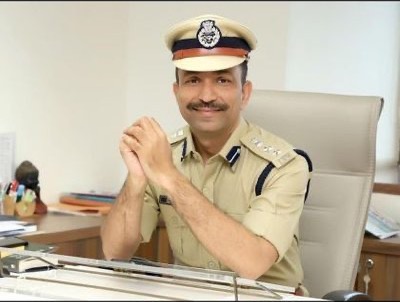
Entering the service
Chirag Koradia was appointed to the Indian Police Service on 29 August 2006, a direct recruit through the Civil Services Examination conducted by the Union Public Service Commission, and was allotted to the Gujarat cadre — the state he comes from. Entry to the service by that route is deliberately narrow, and it commits an officer to a lifetime in one state’s police organisation, learning its districts, its institutions and its particular problems from the inside.
That commitment has held for twenty years. Every appointment recorded in the public list of IPS officers maintained by the Government of Gujarat has been within the state: district and city charges, the state capital at Gandhinagar, and range headquarters at Godhra and Bhuj.
District charge and state intelligence
The formative appointment for an officer of this service is the district — the point at which one name is answerable for law and order across a whole administrative area. Chirag Koradia held that charge as Superintendent of Police, Sabarkantha. In July 2014 he was transferred from the district to the State Intelligence Bureau at Gandhinagar, moving from the visible, immediate work of a district to the quieter discipline of assessment and early warning.
Protective security at the seat of government
He subsequently served as Superintendent of Police for Chief Minister and VIP Security at Gandhinagar, an appointment recorded against his name in the state’s published lists across several years. Protective security is an unforgiving speciality: it is judged entirely by what does not happen, it must be organised in advance and rehearsed, and it demands close coordination with district police, intelligence and central agencies on every movement.
City policing and range supervision
As Additional Commissioner of Police (Traffic and Crime) in Vadodara City he held two of the most publicly felt portfolios in urban policing at once. In October 2022 he was posted as Deputy Inspector General of Police for the Panchmahal Range at Godhra — his first range command, and a shift from executing policing to supervising how several districts execute it. He returned to metropolitan policing in 2023 as Additional Commissioner of Police, Sector I, Ahmedabad City.
Inspector General, Border Range
In April 2024, in a reorganisation of the Gujarat cadre that promoted and moved a large number of officers, Chirag Koradia was promoted to the grade of Inspector General of Police and appointed to the Border Range at Bhuj, succeeding J. R. Mothaliya, who moved to the Ahmedabad Range. The Gujarat Government’s published list of IPS officers continued to record him in that charge in its edition as on 31 August 2025.
The Border Range is the police command for the Kutch districts on Gujarat’s western international frontier — a jurisdiction of salt desert, creek and coast, with major ports and an industrial belt inside it, and a permanent requirement to work in step with the Border Security Force, the Indian Coast Guard and the marine police.
What the record reflects
No public statement of personal philosophy has been published under his name, and none is invented here. What follows is drawn from the shape of the appointments themselves — the demands each one makes on the officer who holds it.
- Breadth before height
- District law and order, intelligence, protective security, city traffic and crime, and range supervision are four different trades. Holding all of them before reaching Inspector General is what allows a range officer to judge subordinate work fairly.
- Prevention over spectacle
- Intelligence and protective security are measured by the absence of incident. Both appointments reward patient staff work, rehearsal and coordination rather than visible action.
- Working with, not around
- Frontier and coastal policing cannot be done by the state police alone. The Border Range sits inside a standing arrangement with central forces, port authorities and customs, in which each partner keeps its own mandate.
- The counter is the institution
- Whatever a range office decides, a citizen experiences the police at a station counter. Supervision that never reaches that counter has not reached anything.
A note on sources
Every factual statement on this website — names, dates, ranks, appointments and transfers — is taken from official transfer and promotion notifications, the lists of IPS officers published by the Government of Gujarat, and reports in the public press. Where a detail is not on the public record it has been left out rather than filled in. No employer, qualification, award, statistic, quotation or affiliation has been invented for this profile.