Chirag Koradia IPS · Gujarat Cadre
Indian Police Service · Gujarat

Chirag Koradia

A career police officer of the 2006 batch, serving the Gujarat cadre for two decades — today Inspector General of Police for the Border Range at Bhuj, the range that keeps watch over the state’s western frontier.

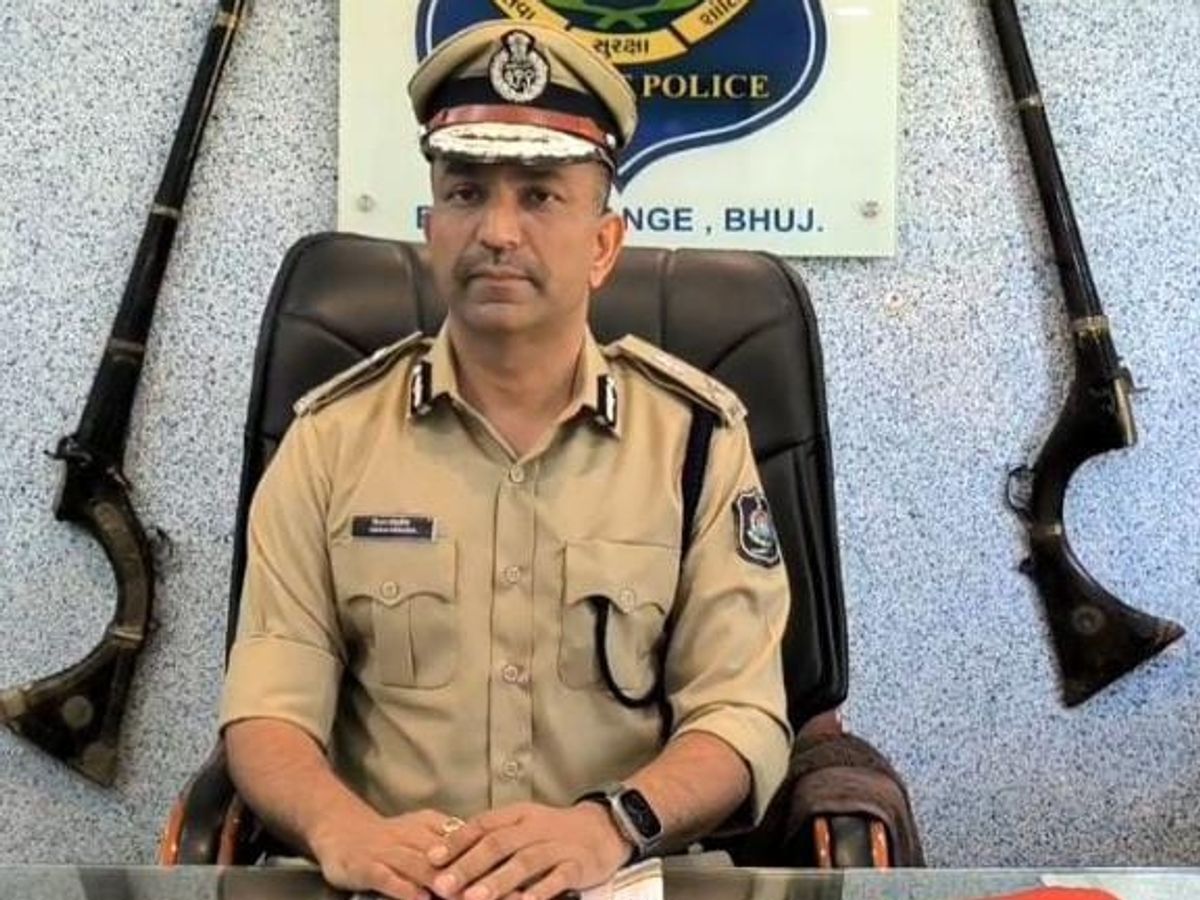
Chirag Koradia in police uniform, seated at his desk in the Border Range office at Bhuj beneath the range signboard.
Fig. 01 At the Border Range headquarters, Bhuj, Kutch.

Twenty years of continuous service across district command, state intelligence, protective security, metropolitan policing and range supervision — and, since April 2024, at the rank of Inspector General.

Service
Indian Police Service
Cadre & batch
Gujarat, 2006
Present charge
IGP, Border Range
01 — Introduction

An officer of the frontier range

Chirag Mohanbhai Koradia joined the Indian Police Service on 29 August 2006 and was allotted to the Gujarat cadre. In the twenty years since, his postings have moved between the three registers in which Indian policing is practised: the district, where law and order is felt most directly; the capital, where intelligence and protective security are organised; and the range, where several districts are supervised as one command.

In April 2024 he was promoted to the grade of Inspector General of Police and appointed to the Border Range at Bhuj — the command responsible for policing the Kutch districts along Gujarat’s western frontier. It is among the more demanding charges in the state: an immense and sparsely populated landscape of salt desert, creek and coastline, bordered by an international boundary and served by some of India’s largest ports.

This website sets out that record plainly — the postings, the responsibilities they carry, and the character of the work — drawn from official notifications, the Gujarat Government’s published lists of IPS officers, and the public press.
Joined the IPS

29 August 2006

Cadre

Gujarat

Present rank

Inspector General of Police

Range headquarters

Bhuj, Kutch

02 — Professional perspective

Policing a frontier is the work of many hands, held to one standard.

A range command is not a single police station writ large. It is a supervisory office: it sets the standard by which subordinate districts investigate, it moves resources to where pressure is greatest, and it holds the line on quality — of the first information report, of the case diary, of the treatment a complainant receives at the counter.

On a frontier that responsibility widens further. The state police work alongside the Border Security Force, the Indian Coast Guard, marine police stations, port authorities and customs. Each has its own mandate; none can do the work alone.

01

Supervision that reaches the station

The measure of a range office is whether its standards are visible at the smallest police station in the district — in how a complaint is registered, how an investigation is documented, and how quickly a citizen is answered.

02

Coordination as a discipline

Frontier and coastal policing is inherently multi-agency. Shared intelligence, joint planning and rehearsed procedure are what turn several separate mandates into a single, coherent response.

03

Continuity of the record

Officers are transferred; the institution remains. Careful records, orderly handovers and decisions that can be explained years later are what allow a police organisation to keep its memory.

04 — The range in context

Where the work is done

Kutch is the largest district area in India, and the Border Range at Bhuj is the police command that answers for it. The terrain sets the terms of the work: the Great and Little Rann, seasonally flooded and otherwise a hard salt plain; a long creek system where land and sea are difficult to tell apart; and a coastline running past Jakhau and Mandvi.

Overlaid on that emptiness is concentrated industry. Deendayal Port at Kandla and the port at Mundra are among the busiest in the country, and the Gandhidham–Anjar belt around them carries the population, traffic and commerce of a substantial city. A single range therefore holds both the quietest and the busiest policing problems in Gujarat.

The composition of a police range is fixed by the State Government and revised from time to time; the Border Range’s constant is the Kutch frontier itself.

05 — Enquiries

Correspondence and requests

Media enquiries, invitations and correspondence relating to this website are received by Mr. Digant Sharma.

Go to contact